Updated: 27.04.2026
- New data from Juniper Research points to growth B2B payments in stablecoins will reach $13,4 billion this year and $5 trillion by 2035.
- Researchers believe that the main reason for their popularity is the inefficiency of correspondent banking operations.
According to the new report Juniper Research estimates that the volume of B2B payments based on stablecoins will reach $5 trillion by 2035, increasing from $13,4 billion in 2026.
The document states that the main driver of stablecoin adoption is cross-border business payments. Juniper estimates that 85% of the total volume of stablecoin transactions by 2035 will be in the B2B sector.
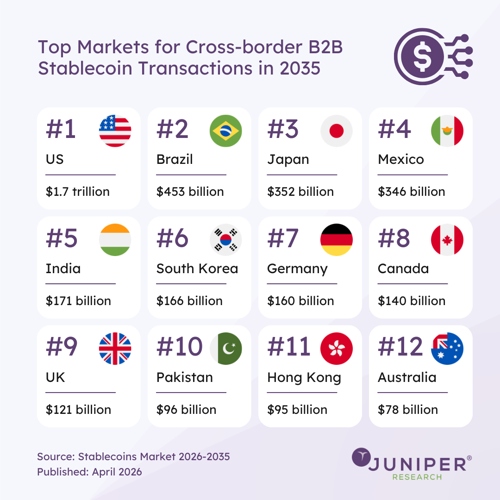
Data from Juniper Research
Juniper sees the inefficiencies of correspondent banking as the main growth driver. Traditional cross-border payments often involve multiple intermediaries, which increases costs and prolongs settlement times.
These transactions typically include correspondent fees, foreign currency margins, and messaging costs. Settlements themselves can take several days depending on the corridor.
Stablecoins, on the other hand, provide real-time settlements on the blockchain and operate 24/7. This reduces transaction costs and increases speed, especially for large international transfers. Stablecoins pegged to the dollar also provide a stable settlement asset across various markets.
Stablecoins don’t replace payment infrastructure; they are being implemented where the benefits are most obvious. The greatest benefits are seen in cross-border B2B transfers, and it is here that we expect the most robust volume growth over the forecast period.
Stablecoin issuers and payment service providers should prioritize enterprise integration and partnerships with treasury firms to reap the most benefit, concluded research analyst Javad Jahan.
The study’s findings suggest that stablecoins will continue to gain popularity in global finance, particularly in areas where traditional systems face cost and efficiency challenges.
It is no coincidence that regulators around the world are seeking to regulate stablecoin markets. In the new the report MiCA (Markets in Crypto-Assets Regulation) stated that the EU’s landmark regulation of cryptocurrencies makes Eurostablecoins much safer, although it reduces their competitiveness.
According to the document, MiCA introduced some of the strictest regulations for stablecoins in the world. These include 100% reserve requirements and no interest payments to holders.
Risk Warning:
The information on this website is for informational and educational purposes only and does not constitute investment advice or financial recommendations. Cryptocurrencies and digital assets carry a high level of risk, including possible loss of capital. The editors are not responsible for decisions made based on the published materials. It is recommended that you conduct your own research (DYOR) before making investment decisions. Read the editorial policy. https://happycoin.club/about/