Аналитики Piper Sandler сохранили рекомендацию «Покупать» по акциям Tesla и подтвердили целевую цену в $500 за акцию производителя электромобилей.
Позиция инвестиционного банка состоит в том, что новая цена, предполагающая рост примерно на 17% относительно текущей цены акций, отражает значительно более широкий бизнес-портфель Tesla и развивающуюся долгосрочную стратегию роста.
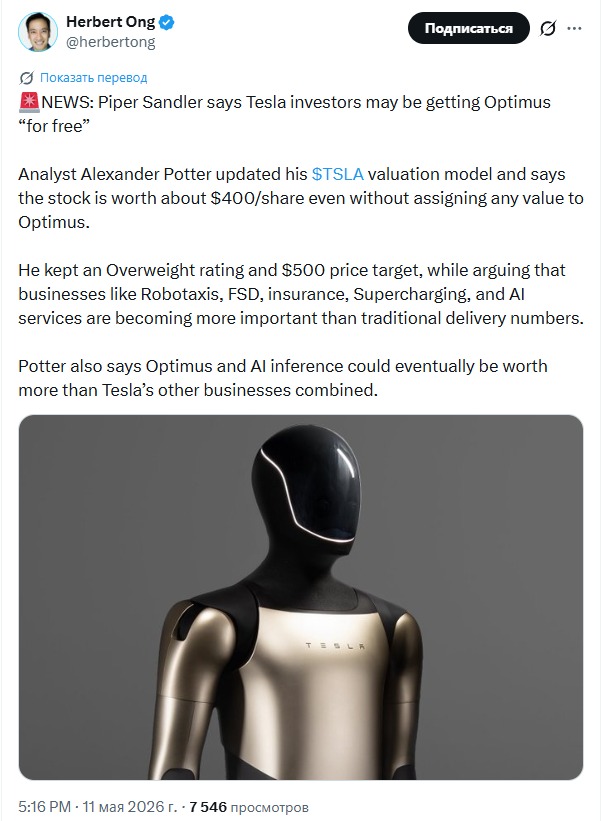
В отчёте организации также представлены прогнозы выручки и прибыли по 17 различным продуктовым линейкам Tesla, которые в совокупности обеспечивают оценку примерно в $400 за акцию. В этих цифрах не учтена инициатива Tesla по созданию человекоподобных роботов Optimus.
На основании этого в Piper Sandler утверждают, что инвесторы, покупающие акции Tesla по этой цене, фактически получают доступ к проекту Optimus бесплатно.
Аналитик Александр Поттер отметил, что пересмотренная модель включает прогнозы выручки и прибыли для нескольких предприятий, которые часто исключаются из традиционных моделей Уолл-стрит. К ним относятся собственные страховые операции Tesla, сеть суперзарядных станций и самостоятельная оценка роботакси.
Поттер также сказал, что прогнозы на 2026 и 2027 годы остаются ниже общих оценок Уолл-стрит из-за ожидаемого снижения поставок, связанного со снятыми с производства продуктами.
Что касается Optimus, то Поттер считает, что бизнес по производству человекоподобных роботов в конечном итоге станет более ценным, чем все существующие направления бизнеса компании вместе взятые.
Целевая цена Pipe Sandler ниже рекордной для Уолл-стрит отметки в $600, установленной Wedbush, но она выше среднего прогноза на 12 месяцев в $410,21, что, согласно данным TipRanks, подразумевает снижение на 2,78%.
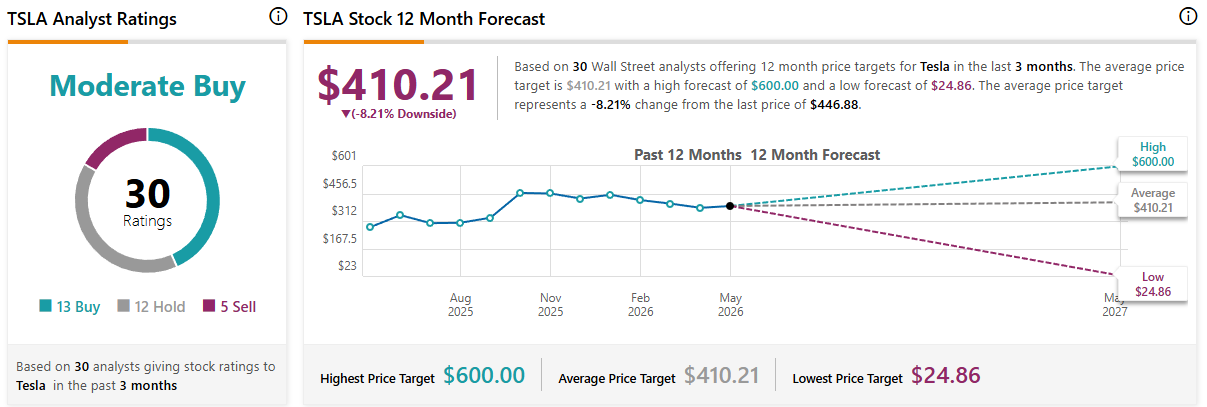
Данные TipRanks
За последние три месяца в среднем 30 аналитиков рекомендовали акции Tesla к «умеренной покупке», при этом 13 человек дали рекомендации «Покупать», 12 — «Хранить» и 5 — «Продавать».
Предупреждение о рисках:
Информация на сайте носит исключительно информационный и образовательный характер и не является инвестиционной рекомендацией или финансовым советом. Криптовалюты и цифровые активы связаны с высоким уровнем риска, включая возможную потерю капитала. Редакция не несёт ответственности за решения, принятые на основе опубликованных материалов. Перед принятием инвестиционных решений рекомендуется проводить собственное исследование (DYOR). Ознакомиться с редакционной политикой https://happycoin.club/about/