Economische gegevens uit de VS duiden op een komende recessie. Een van de belangrijkste indicatoren is de stijging van de rente op 30-jarige Amerikaanse staatsobligaties, die het hoogste punt in de afgelopen twintig jaar van 5% nadert.
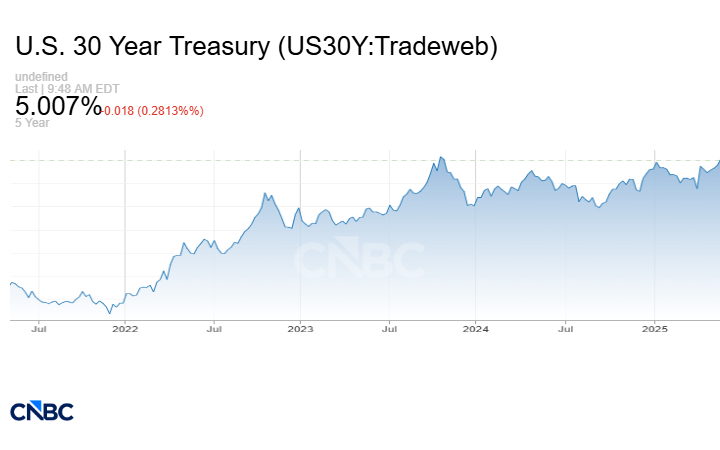
Uit marktgegevens bleek dat de rente maandag kortstondig boven de 5,03% uitkwam, wat de afgelopen twee jaar als aanzienlijke weerstand voor de markten heeft gediend. Merk op dat een rendement van 5% staatsobligaties aantrekkelijk maakt en investeerders dwingt kapitaal uit aandelen te halen, terwijl de financieringskosten voor hypotheken, bedrijfsleningen en Amerikaanse staatsobligaties stijgen.
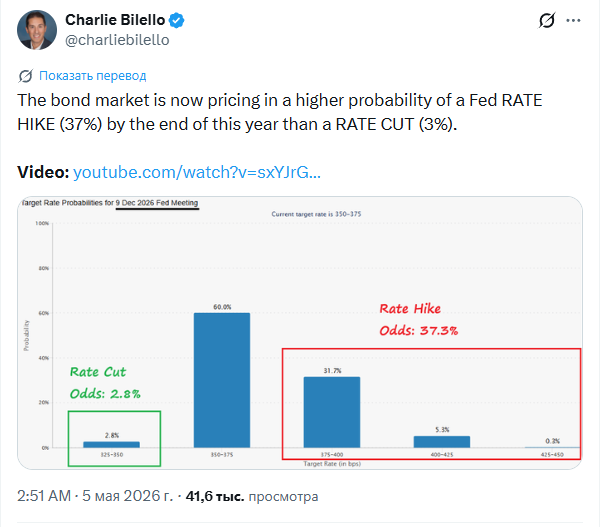
Charlie Bilello, hoofdmarktstrateeg van Creative Planning, meent dat de prijzen nu rekening houden met een grotere kans op een renteverhoging door de Fed tegen het einde van het jaar (37%) vergeleken met de kans van 3% op een renteverlaging door de Fed. Deskundigen zijn het erover eens dat de ontwikkelingen op de obligatiemarkt — gevolgen van een scherpe stijging van de rente op staatsobligaties.
Analisten zien de huidige trend als een waarschuwing die de aandelenmarkt niet kan negeren. Eén analist zegt dat het een nachtmerrie is die zou kunnen leiden tot het soort recessie van 1968.
Hoewel Bitcoin de laatste tijd enige kracht heeft getoond, zouden stijgende rentes op staatsobligaties de cryptocurrency nog verder onder druk kunnen zetten. In de regel verleggen beleggers in extreme omstandigheden hun kapitaal van risicovolle activa naar veiligere activa die door de staat worden gegarandeerd.
Als de geopolitieke situatie in de nabije toekomst verbetert, kan de bullish trend zich voortzetten en zelfs intensiveren. Volgens CoinGecko wordt Bitcoin momenteel verhandeld voor $81.406. Het doorbrak belangrijke weerstand met een waarde van $80.000, wat de weg vrijmaakte voor verdere rally’s.
De informatie op de site is uitsluitend bedoeld voor informatieve en educatieve doeleinden en vormt geen beleggingsadvies of financieel advies. Cryptocurrencies en digitale activa brengen een hoog risico met zich mee, inclusief mogelijk kapitaalverlies. De redactie is niet verantwoordelijk voor beslissingen die worden genomen op basis van gepubliceerd materiaal. Het wordt aanbevolen dat u uw eigen onderzoek (DYOR) uitvoert voordat u beleggingsbeslissingen neemt. Lees het redactionele beleid https://happycoin.club/about/