
- The silver market deficit in 2026 will be 46,3 million ounces.
- In 2025, demand for silver coins and bars grew by 14%, after two consecutive years of decline.
A 46,3 million ounce silver shortage continues to put pressure on a market that was already tight before the start of 2026. According to of the report According to the World Silver Survey 2026, in 2025, global demand exceeded supply for the fifth consecutive year. The deficit was smaller than in 2024, but it still placed additional pressure on aboveground reserves.
Last year, demand for silver coins and bars grew by 14%, following two consecutive years of decline. India led the way, with demand jumping 33%. In Europe, demand grew for the first time in three years. In the Middle East and China, demand increased severalfold, as investor interest increased due to rising prices and the low demand of previous years. Meanwhile, in the US, demand declined for the third consecutive year.
In 2025, global silver production grew by only 3% to 846,6 million ounces, primarily due to increased by-product volumes from copper mining in Peru and the expansion of Polymetal’s Prognoz mine in Russia.
If silver production remains at the same level, the structural deficit of the precious metal will increase to 46,3 million ounces, is approved in the report.
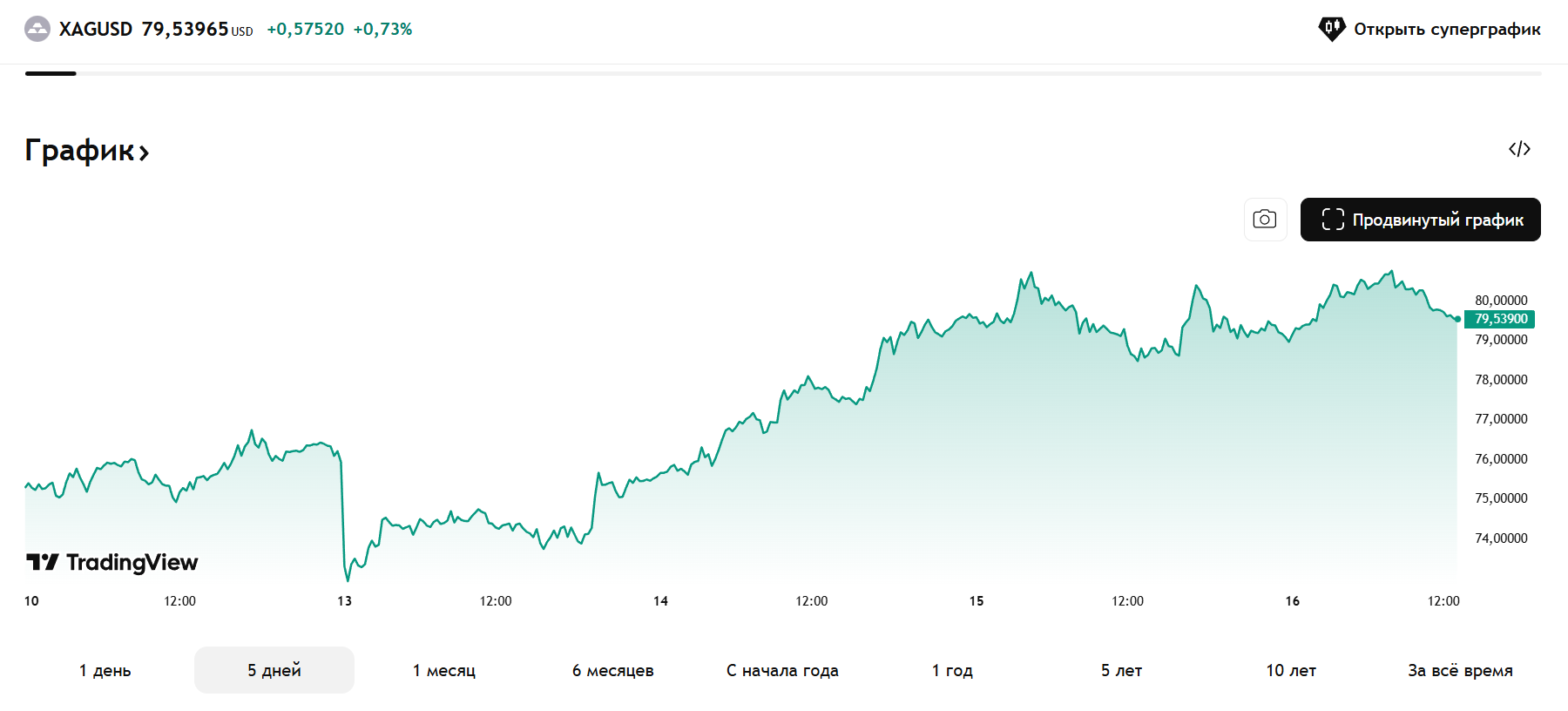
What is the current silver rate? is at $79,6. However, analysts at BlackRock and JPMorgan expect the price of the asset to exceed $80 per ounce by the end of 2026, and could reach $100 by 2030.
Risk Warning:
The information on this website is for informational and educational purposes only and does not constitute investment advice or financial recommendations. Cryptocurrencies and digital assets carry a high level of risk, including possible loss of capital. The editors are not responsible for decisions made based on the published materials. It is recommended that you conduct your own research (DYOR) before making investment decisions. Read the editorial policy. https://happycoin.club/about/