- Компания Berkshire продала все акции Visa, Mastercard и Amazon, нарастив долю в Alphabet.
- Это решение выглядит нелогичным, так как все три компании показывают хорошие результаты, а последний квартал стал для Berkshire самым успешным за последние 10 лет.
По данным ежеквартального отчёта, инвесткомпания Berkshire Hathaway продала все принадлежащие ей акции платёжных гигантов Visa, Mastercard и крупнейшего ретейлера Amazon.
Berkshire также увеличила свою долю в Alphabet, благодаря чему материнская компания Google заняла седьмое место среди крупнейших активов компании.
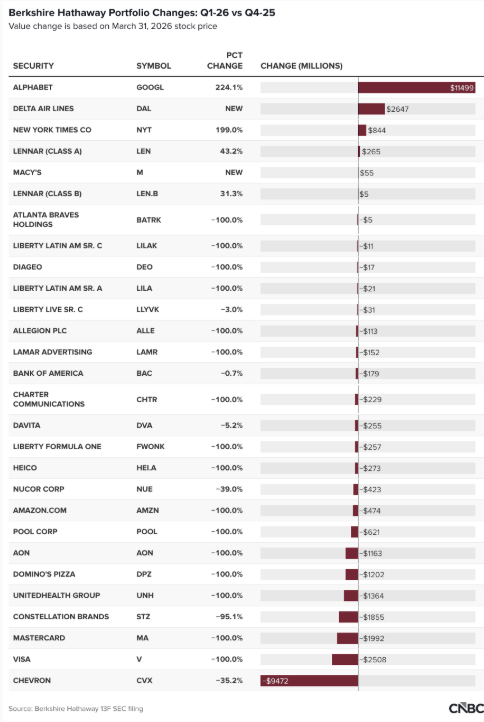
Полный выход из позиций по Visa, Mastercard и Amazon особенно примечателен, поскольку все три компании ассоциировались с бывшим инвестиционным менеджером Тоддом Комбсом. Он покинул Berkshire в конце 2025 года и перешёл в JPMorgan Chase. И теперь сменивший в начале 2026 года Уоррена Баффета Грег Абель избавляется от этих активов.
К концу 2025 года Berkshire владела акциями Visa на $2,91 млрд и акциями Mastercard на $2,28 млрд. И то, что руководство компании сейчас распродаёт ценные бумаги платёжных систем, вызывает удивление, особенно учитывая их высокие показатели. Так, финансовый директор Visa Кристофер Су заявил, что последний квартал стал для компании самым успешным за последние 10 лет: выручка от дополнительных услуг выросла на 27% до $3,3 млрд, выручка от коммерческих услуг и денежных переводов повысилась на 24%. Объём платежей в США также увеличился.
Прибыль Berkshire Hathaway тоже растёт. Ранее редакция Happy Coin News писала о росте прибыли инвесткомпании на 18% в первом квартале, при этом объём денежных средств приблизился к $400 млрд.
Предупреждение о рисках:
Информация на сайте носит исключительно информационный и образовательный характер и не является инвестиционной рекомендацией или финансовым советом. Криптовалюты и цифровые активы связаны с высоким уровнем риска, включая возможную потерю капитала. Редакция не несёт ответственности за решения, принятые на основе опубликованных материалов. Перед принятием инвестиционных решений рекомендуется проводить собственное исследование (DYOR). Ознакомиться с редакционной политикой https://happycoin.club/about/