- Стоимость BTC выросла почти на 17% в апреле.
- Из-за низкого спроса на биткоины восходящая тенденция не отличается устойчивостью.
- На рынке криптовалюты высока вероятность возобновления медвежьего тренда.
Торгующий криптовалютами больше восьми лет трейдер Тед Пиллоуз сказал, почему бычье ралли на рынке биткоина будет скоротечным.
Цена BTC начала повышаться 2 апреля и менее чем за две недели увеличилась почти на 17%. Во вторник курс монеты достиг максимального с 4 февраля 2026 года показателя на отметке $76,170, однако Тед не спешит радоваться и предупреждает об опасности разворота.
Наблюдается чёткая дивергенция между стоимостью биткоина и спросом на спотовом рынке. Цена обновляет пики, в то время как востребованность криптовалюты снижается. Это признак того, что ралли началось за счёт рынка фьючерсов, поэтому восходящая тенденция неустойчивая, — написал Пиллоуз.
Тед опубликовал график, на котором видно, что совокупная кумулятивная дельта объёма снизилась во время бычьего тренда. Уменьшение показателя этого технического индикатора свидетельствует о падении объёма открытых ордеров на спотовом рынке. То есть трейдеры не торопятся покупать и продавать монеты и хотят переждать период высокой волатильности.
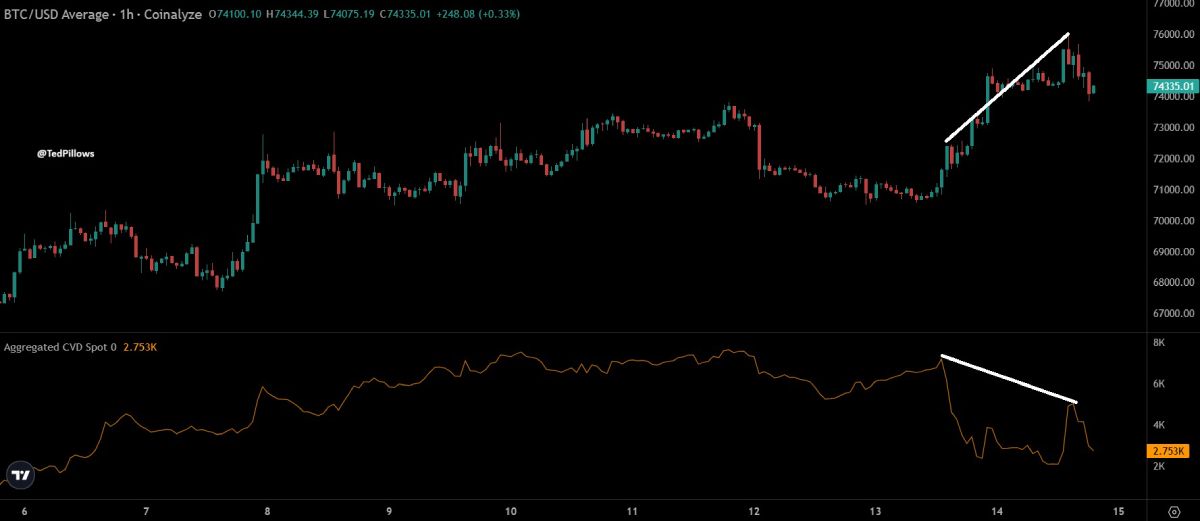
Колебания курса биткоина (сверху) и совокупной кумулятивной дельты объёма
Однако один из комментаторов не согласился с мнением Теда, потому что 14 апреля открытый интерес на рынке фьючерсов на биткоины оставался на низком уровне и, судя по данным Coinglass, вырос всего лишь на 0,37% за последние сутки. Соответственно, курс цифрового актива подтолкнули вверх не торговцы деривативами. В этом случае повышение цены BTC, несмотря на падение спроса, можно объяснить низким объёмом открытых ордеров, что собственно и указывает на слабость бычьего тренда. Если прогноз Пиллоуза, о котором редакция Happy Coin News писала 9 апреля, сбудется, то биткоин подешевеет на 50%.
Предупреждение о рисках:
Информация на сайте носит исключительно информационный и образовательный характер и не является инвестиционной рекомендацией или финансовым советом. Криптовалюты и цифровые активы связаны с высоким уровнем риска, включая возможную потерю капитала. Редакция не несёт ответственности за решения, принятые на основе опубликованных материалов. Перед принятием инвестиционных решений рекомендуется проводить собственное исследование (DYOR). Ознакомиться с редакционной политикой https://happycoin.club/about/