Bijgewerkt: 23-04-2026
- B Donderdag kocht Bitmine, eigenaar van Ethereum-schatkistactiva, nog eens 100.000 ETH.
- Deze aankoop was de grootste voor Bitmine sinds begin 2026.
Deze week kocht Bitmine, de grootste publieke houder van Ethereum, nog eens 100.000 ETH, waarmee hij volgens Lookonchain bijna $233,7 miljoen uitgaf.
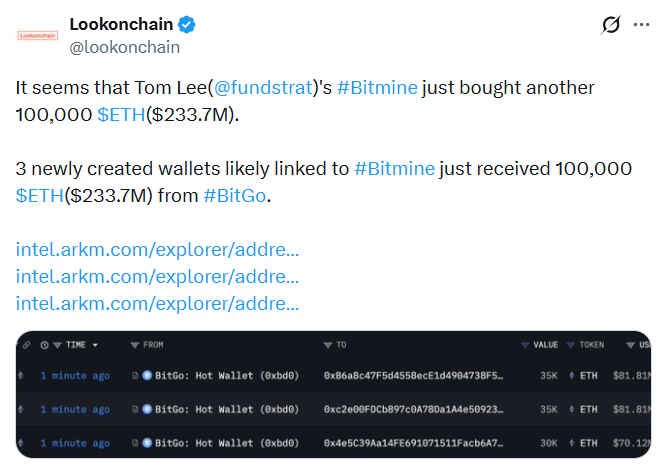
Met de laatste aankoop versterkt Bitmine zijn positie als een van de grootste zakelijke houders van Ethereum verder. Het bedrijf heeft nu ongeveer 4,97 miljoen ETH, ruim 4,1% van het totale aanbod van de altcoin, wat niet ver verwijderd is van de doelstelling van 5%.
Bitmine heeft 61.232 ETH vergrendeld, wat het totale geblokkeerde bedrag op $7,88 miljard brengt en de jaarlijkse inzetopbrengsten op ongeveer $212 miljoen met een zevendaags rendement van 2,89%. Ongeveer 68% van de ETH van Bitmine is vergrendeld.
Tom Lee staat bekend als een van de meest fervente voorstanders van Ethereum. Hij noemde het digitale bezit een ‘waardeopslag in oorlogstijd’ en voorspelde eerder dat de huidige cryptowinter eerder zou kunnen eindigen dan de markten verwachten. Volgens waarnemers is zijn recente aankoop van ETH een duidelijke uiting van vertrouwen dat de prijs van de altcoin snel zou kunnen stijgen, aangedreven door de lichte daling van Bitcoin richting $78.000.
Volgens CoinMarketCap is Ethereum de afgelopen 24 uur met meer dan 3% in prijs gedaald tot $2.316. Deze daling is hoogstwaarschijnlijk te wijten aan een lichte correctie van Bitcoin tot $78.000.
De informatie op de site is uitsluitend bedoeld voor informatieve en educatieve doeleinden en vormt geen beleggingsadvies of financieel advies. Cryptocurrencies en digitale activa brengen een hoog risico met zich mee, inclusief mogelijk kapitaalverlies. De redactie is niet verantwoordelijk voor beslissingen die worden genomen op basis van gepubliceerd materiaal. Het wordt aanbevolen dat u uw eigen onderzoek (DYOR) uitvoert voordat u beleggingsbeslissingen neemt. Lees het redactionele beleid https://happycoin.club/about/