Updated: 02.04.2026
- Bitcoin’s current 50% decline from its price high just above $126,000 is different from previous declines that brought corrections to 80-90%.
- Several experts immediately expressed the opinion that this is a positive sign, reflecting a certain maturity of the market.
Since peaking at $126,200 in October 2025, Bitcoin’s price has fallen by approximately 50%, significantly less than previous declines of 80-90%.
Analysts they saythat the decline in volatility reflects the growing participation of institutional investors and the maturity of the market structure.

Smaller declines in this cycle indicate that the market is stabilizing. Due to greater trading activity and institutional investor participation, the ups and downswings are naturally smaller, noted AdLunam co-founder Jason Fernandez.
In earlier cycles Bitcoin showed much deeper declines. After reaching $1163 in 2013, the price fell to $152 by early 2015, a loss of 87%. The 2017 high was around $20,000, later falling to $3122, a decline of 84%.
Analyst Mati Greenspan added that a drop to $10,000 in the current environment would likely require a major global liquidity crisis.
ETF data reflect the changing sentiment around Bitcoin. In March, US spot bitcoin ETF $1,32 billion was received, marking the first positive month since October 2025. Asset volumes stabilized at around 1,31 million BTC, recovering from a 7% low in February.
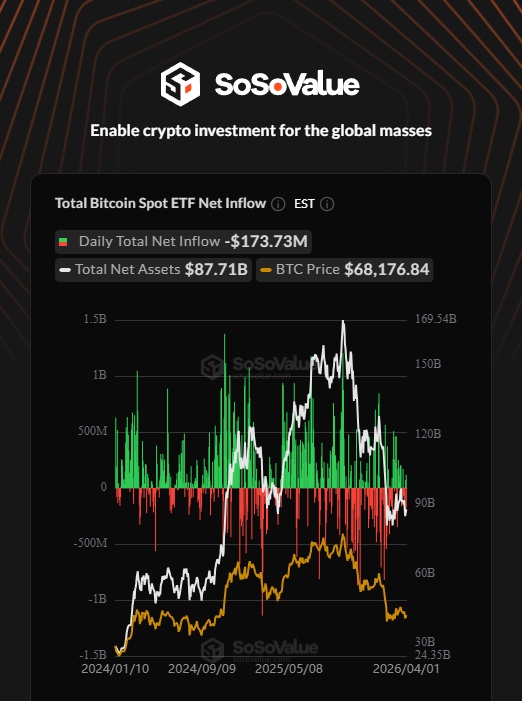
SoSoValue data
Now Bitcoin provides better results for investment portfolios. Jason Fernandez noted that even 1-3% of investments can improve returns without significantly increasing risk. Nevertheless, caution remains among institutions.
Risk Warning:
The information on this website is for informational and educational purposes only and does not constitute investment advice or financial recommendations. Cryptocurrencies and digital assets carry a high level of risk, including possible loss of capital. The editors are not responsible for decisions made based on the published materials. It is recommended that you conduct your own research (DYOR) before making any investment decisions.