
- The global financial crisis that analysts are talking about so much will not happen overnight.
- It will be triggered by processes in the sovereign debt and energy markets, whose problems will spread to the global credit system.
The sword of Damocles hangs over the global financial system as the macroeconomic situation becomes dire.
For digital asset investors and market participants, understanding this vector is crucial. A systemic collapse like the one happened in 2008This doesn’t happen overnight. It requires a domino effect spreading from sovereign debt and energy markets to the global credit system.
Phase 1: First Alarm Bells (Bonds and Oil)
В current yield The 30-year US Treasury note is hovering around 5,109%, the 30-year UK government bond is at 5,857%, and Brent crude oil is trading around $108,54, while the VIX, the volatility index for stocks, is at a relatively calm 18,53.
To understand when market anxiety turns into structural damage, analysts track three specific criteria:
- The yield on 30-year US Treasury bonds is now firmly above 5,25%.
- The yield on 30-year UK government bonds exceeds 6,00%.
- Brent crude oil is trading above $115 per barrel.
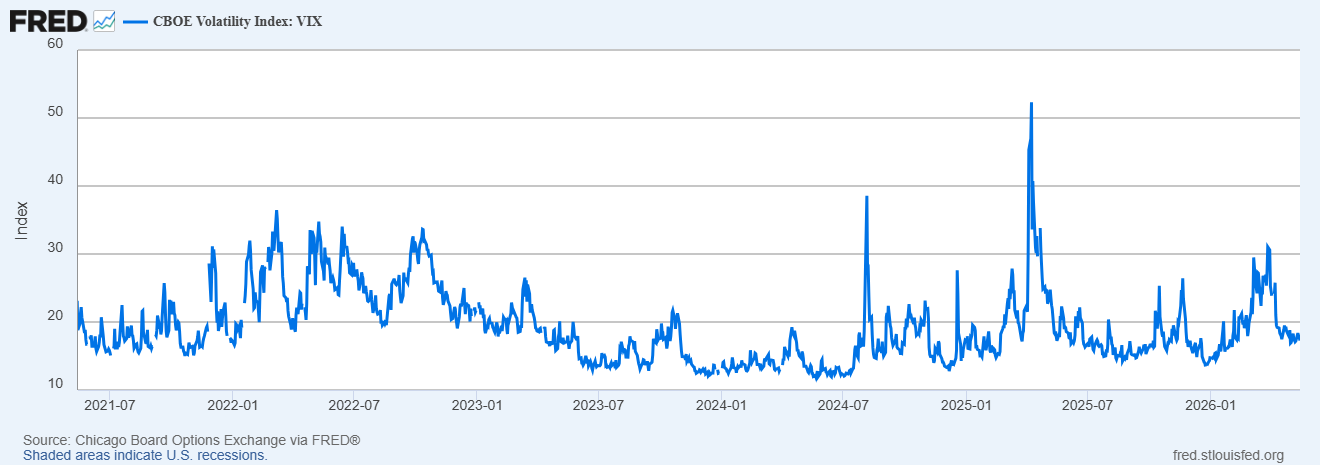
Data from the Federal Reserve Bank of St. Louis
Long-term government bonds are the primary mechanism for transmitting financial losses. According to the fiscal IMF monitor for April 2026, global government debt reached nearly 94% of GDP in 2025 and is expected to reach 100% by 2029. Higher yields sharply increase the cost of servicing this massive debt load.
The situation is exacerbated by the crisis in the energy sector. U.S. Energy Information Administration highlights The Strait of Hormuz is a critical global hub, accounting for approximately 20% of global liquid hydrocarbon consumption. In the event of a serious supply disruption, the World Bank warnsthat the average price of Brent crude oil in 2026 could be $115.
High oil prices coupled with rising bond yields put central banks in a difficult position: either bail out markets too soon or wait too long and witness structural collapse.
Phase 2: Confirmation Signal (Credit Crisis)
Despite alarming bond and energy charts, broader data shows that a systemic crisis has not yet been confirmed. Corporate credit remains a critical buffer.
US High Yield Bond Option Spreads recently reached 2,76%-2,82%, which is significantly lower than their long-term historical average of 5,19%. In addition, the Federal Reserve Bank of Chicago’s National Financial Conditions Index is at -0,524, which indicates on the fact that liquidity in the banking system remains below average.
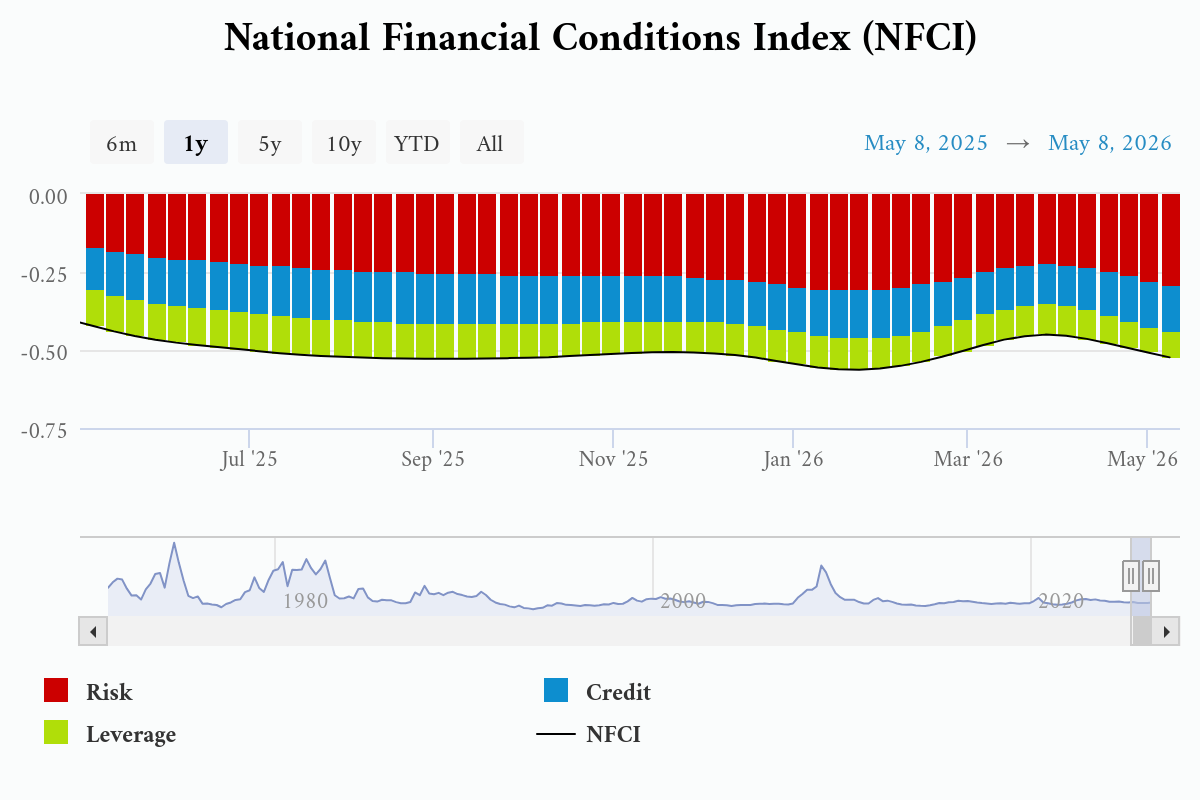
Data from the Federal Reserve Bank of Chicago
A true macroeconomic correction only develops into a systemic financial crisis when stress spreads to the credit market. The real confirmation signals to watch for are:
- A sharp jump in the VIX index above 25-30, signaling aggressive hedging by equity investors.
- The national financial conditions index crosses the zero mark, indicating a simultaneous tightening of monetary policy and the banking system.
- Widening spreads on high-yield corporate bonds to 4,5-5,0%.
Until credit spreads react to the shock, the current market situation is best classified as a risk of severe macroeconomic correction rather than systemic collapse. Currently, the structural risk of a global financial crisis over the next 12 months is estimated at a modest 10-15%.
Bitcoin: Hedge or High-Beta Asset?
With a total market capitalization of $2,6 trillion and Bitcoin dominance of approximately 60%, the digital asset ecosystem is fully integrated into global liquidity flows. Trading around $78,000, Bitcoin showed short periods of detachment from traditional stocks, trading lower even when The S&P 500 reached new records..
How will it behave? Bitcoin In case of a deepening crisis, it depends entirely on which phase of the trigger map is activated:
- The Interest Rates and Oil PhaseIf the shock is limited to bond yields and energy inflation, Bitcoin, will likely trade within its standard regime – influenced by dollar strength, real interest rates, and spot inflows ETF and general risk appetite.
- Credit crisis phase: If high-yield bond spreads rise above 4,5% and the system faces real deleveraging, Bitcoin will face its most serious test yet. Amid a liquidity crunch, investors are selling what they can, not what they want. Bitcoin may initially trade as a high-beta collateral asset, experiencing downside pressure alongside traditional risk assets.
The ultimate bullish macroeconomic scenario for Bitcoin will only materialize after the initial selling pressure subsides. If BTC can stabilize in an environment where fiat systems are facing institutional reputational issues and sovereign debt, it will truly cement its status as a systemic hedge.
Risk Warning:
The information on this website is for informational and educational purposes only and does not constitute investment advice or financial recommendations. Cryptocurrencies and digital assets carry a high level of risk, including possible loss of capital. The editors are not responsible for decisions made based on the published materials. It is recommended that you conduct your own research (DYOR) before making investment decisions. Read the editorial policy. https://happycoin.club/about/