- Aave deposits fell from $48,5 billion to $29,6 billion after the rsETH exploit led to an outflow of funds.
- USDC usage remained at around 100% as high rates failed to provide fresh liquidity to Aave.
Aave deposit volume shrunk From approximately $48,5 billion before the incident to a current $30,7 billion, meaning almost a third of the capital was withdrawn in a short period. This occurred immediately after the rsETH hack, when $15,1 billion was withdrawn from the platform in just three and a half days.
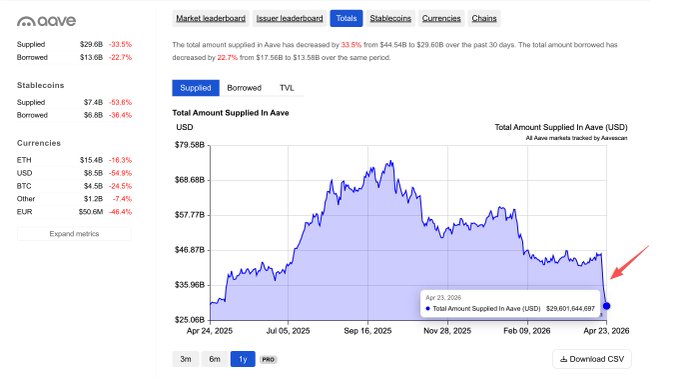
The outflow coincided with a sharp increase in borrowing activity after 116,500 rsETH minted through the exploit were deposited on Aave and used as collateral to obtain ETH. The attacker received 106,466 ETH, worth approximately $250 million, leading to a liquidity shortage across all pools.
As a result, USDC liquidity conditions worsened. The utilization rate reached approximately 99,87%, with available liquidity amounted to less than $3 million. Over the course of 24 hours, both lent and borrowed funds decreased by approximately $60 million. This indicates that repayments were occurring through withdrawal requests rather than new deposits. As a result, the pool continued to shrink rather than decrease leverage.
However, during this period, interest rates remained high. For USDC and USDT deposits, they hovered around 13,4%, while borrowing rates approached 15%. Despite this, liquidity did not increase, indicating that in the current environment, higher rates were not enough to attract immediate investment.
While Aave experienced significant outflows, other lending protocols saw mixed results. Morpho deposits fell from $11,7 billion to $10,2 billion. Meanwhile, SparkLend saw an influx of funds, with the total amount locked increasing from $1,9 billion to $3,2 billion.
Risk Warning:
The information on this website is for informational and educational purposes only and does not constitute investment advice or financial recommendations. Cryptocurrencies and digital assets carry a high level of risk, including possible loss of capital. The editors are not responsible for decisions made based on the published materials. It is recommended that you conduct your own research (DYOR) before making investment decisions. Read the editorial policy. https://happycoin.club/about/