- News of a ceasefire between the US and Iran, as well as the resumption of shipping through the Hormuz Canal, pushed the price of Bitcoin to $72,300.
- Altcoins also showed growth.
- However, trader Ted Pillouse predicts a bear market-like decline is imminent.
The ceasefire in Iran has sent many cryptocurrencies soaring, but will the bullish trend last?
On April 8, it became known that the governments of the United States and Iran deal A two-week suspension of hostilities was agreed. During this period, unimpeded shipping through the Strait of Hormuz will be resumed, but only under coordination with the Iranian military.
The deal kick-started a strong upward trend in the digital asset market, which has seen Bitcoin went up in price by 4,1%, Ethereum – by 6,6%, and XRP – by 4,3%.
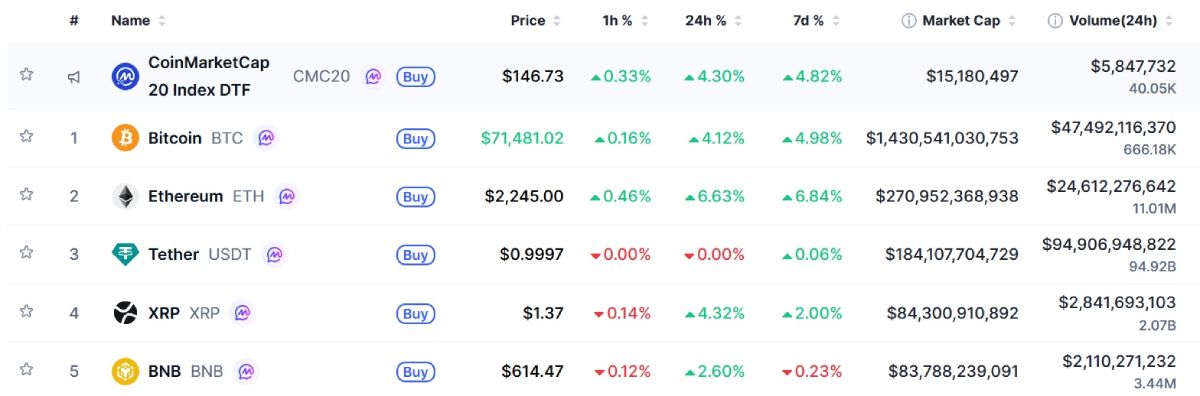
Changes in the value of some cryptocurrencies
Experienced trader Ted Pillouse, who is known for his accurate forecasts on the price of digital assets, commented the situation as follows:
We’re in a bear market, characterized by short-lived rallies. The ceasefire agreement has boosted coin prices, but they’ll crash in the next few weeks and hit new lows..
Expecting continued appreciation in cryptocurrencies in the medium term, Ted has opened A long position in Ethereum. Judging by the chart, ETH has a chance to rise to approximately $2,686, as the 200-day exponential moving average line runs along that level. In this case, buying coins at the current price would yield a 20% profit.
After reaching this barrier, the Ethereum price should fall and likely break the previous low reached on February 6 at $1,748. Therefore, the bullish trend in the ETH market and other digital assets could continue for two to three weeks, but then the downward trend will resume.
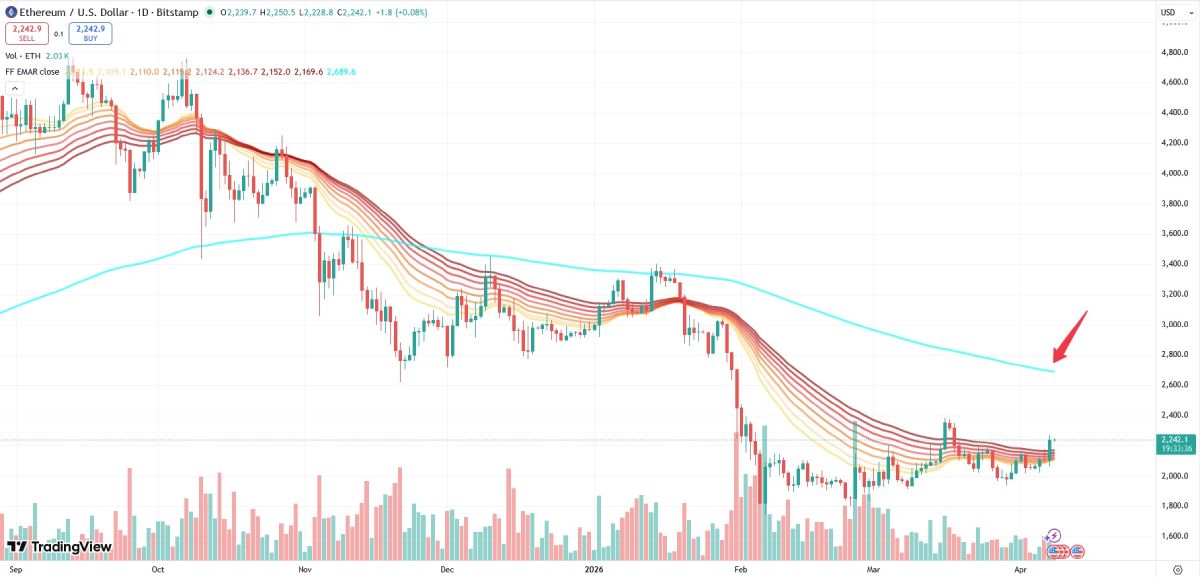
200-day EMA on the Ethereum chart
Risk Warning:
The information on this website is for informational and educational purposes only and does not constitute investment advice or financial recommendations. Cryptocurrencies and digital assets carry a high level of risk, including possible loss of capital. The editors are not responsible for decisions made based on the published materials. It is recommended that you conduct your own research (DYOR) before making any investment decisions.