- In the first quarter of 2026, large investors sold Bitcoin at a loss.
- They feared a continuation of the downward trend due to the conflict in the Middle East.
- A number of users polymarket also bets on a decline in the price of BTC.
In the first quarter of 2026, some wealthy investors opted to sell Bitcoin at a record loss. Why did this happen?
From January to March of this year, sharks, which are the names of those who own between 100 and 1,000 BTC worth between $6,7 million and $67 million at the current exchange rate, lost On average, $188,5 million per day was lost by liquidating digital assets. Meanwhile, whales, who held between 1,000 and 10,000 bitcoins worth between $67 million and $670 million, lost $147,5 million. Thus, wealthy investors lost $336 million every day.
Due to the large amount of BTC sold during the bearish trend, the amount of losses for sharks and whales in the first three months of 2026 reached $30,9 billion, which turned out to be the highest value since 2022, when kriptovalyuta rapidly became cheaper.
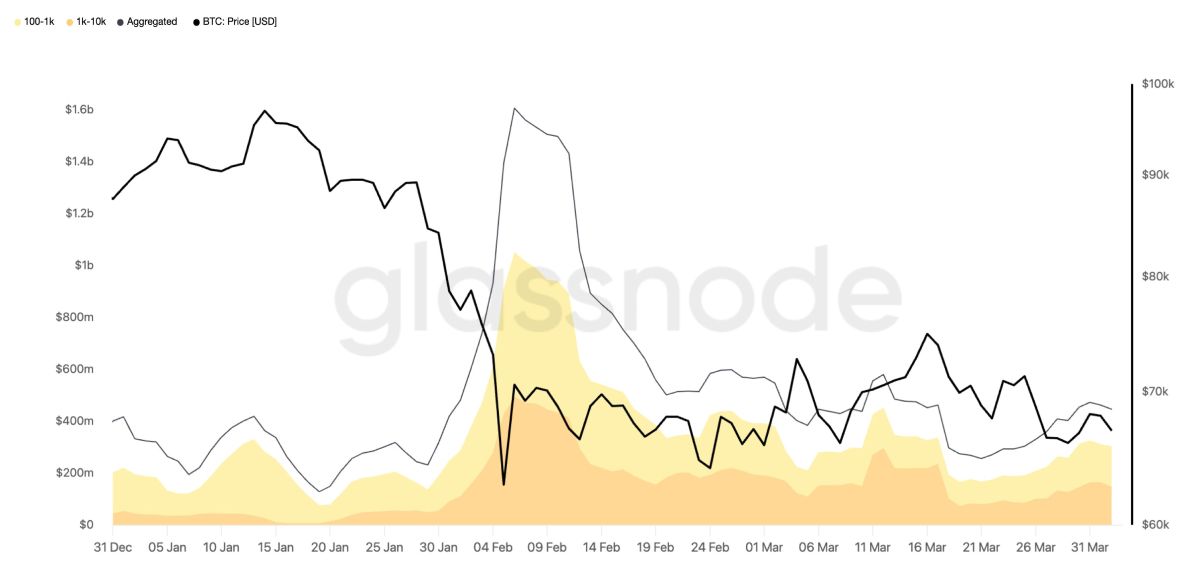
The amount of loss realized by sharks and whales
The decision by the wealthy to dump Bitcoin at a loss can be explained by the fact that they are counting on the downward trend continuing and are planning to buy digital assets at the bottom in order to make a profit that will compensate for the losses and even allow them to break even.
Most forecast market users also predict a resumption of the bearish trend. polymarketThis is supported by the fact that the probability of Bitcoin’s price falling to $55,000 by the end of the year estimated The platform offers a 76% return. A successful bet on this outcome will yield a 30% return, while a bet on the asset’s price not falling to this level will almost quadruple your capital.
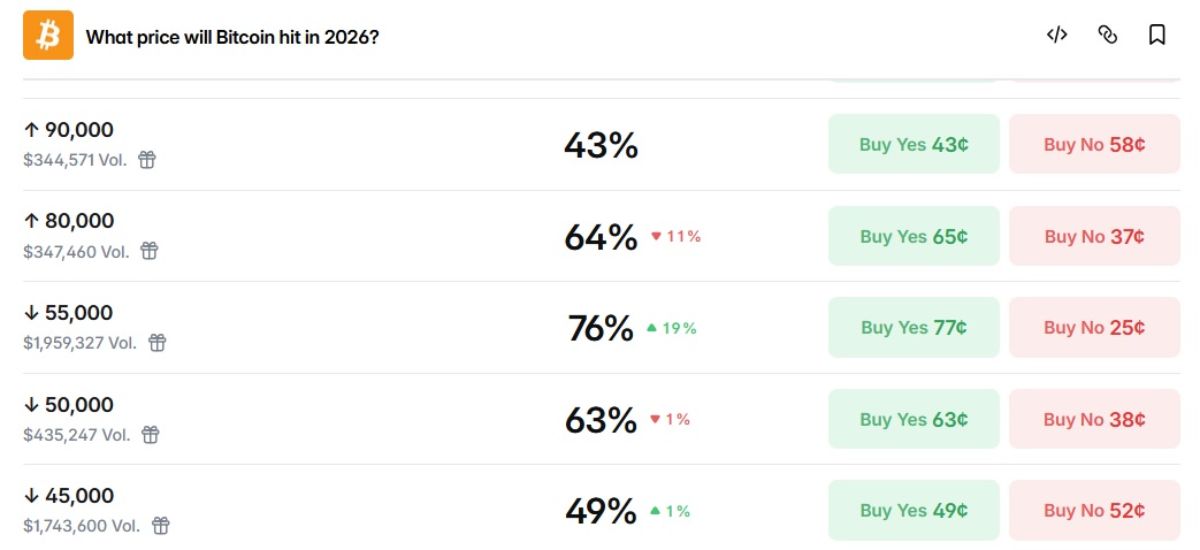
The chance of BTC price reaching different levels
Risk Warning:
The information on this website is for informational and educational purposes only and does not constitute investment advice or financial recommendations. Cryptocurrencies and digital assets carry a high level of risk, including possible loss of capital. The editors are not responsible for decisions made based on the published materials. It is recommended that you conduct your own research (DYOR) before making any investment decisions.